Gown Color by Number Book
- 4.9
- Rating
- 5.00M
- Installs
- Free
- Price
 Analysis by App-foxy
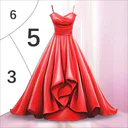
I found Gown Color by Number Book to be a gentle board-style coloring game built around a very simple promise: choose a gown picture, follow the numbered color areas, and gradually turn a blank illustration into something finished. That simplicity is the main reason it feels approachable. I did not need to learn rules, manage a timer, or compete with anyone before I could start coloring.
The game comes from LoveColoring Game and is free to install, with optional in-app purchases ranging from $0.99 to $49.99 per item. It is rated for Everyone, runs on Android 8.0 or later, and the current version is 2.1.7. Those details make it easy to consider for a shared family device, although the purchase range means I would still supervise spending if a child uses it.
After spending time with it, my view is that this is best understood as a calm, guided coloring activity rather than a deep strategy board game. Its strongest qualities are readable structure, low pressure, and the satisfaction of completing dress designs. Its weaker side is equally clear: anyone looking for freehand drawing, sophisticated creative tools, or a more demanding game will probably outgrow it quickly.
You May Also Like

 Blood Strike: 2.5 Anniversary
Blood Strike’s Loadouts Turn Every Drop Into a Tactical Gamble
A close look at Blood Strike’s custom loadouts: how fast access to signature weapons reshapes its battle royale rhythm, rewards preparation, and narrows the gap between fights.

 Pandora - Music & Podcasts
Pandora’s Music Is Easy to Start, but Harder to Recover
Pandora’s strength is its low-effort path from a seed to a station. Its weak spot is how much confidence it asks you to place in connection, setup, and quiet recovery.

 8 Ball Pool
 Is Built on Rivalries, Rematches, and Routine
A close look at the rivalries, rematches, shared routines, and unanswered safety questions that turn a quick pool match into a persistent mobile community.

 Samsung Music
’s Quiet Strength Is Playing What You Already Own
Its reach comes less from spectacle than from dependable access to a personal library. That simplicity is both the app’s strongest retention engine and its ceiling.

 AccuWeather: Weather Radar
AccuWeather Review: A Quick, Clear Forecast for Everyday Decisions
For everyday plans, the best forecast is the one you can understand quickly. AccuWeather makes rain timing, radar, and local conditions easy to act on, with a few trade-offs.

 Hill Climb Racing
Why Hill Climb Racing Still Turns Crashes Into One More Run
A tiny car, a bumpy hill and one more upgrade: Hill Climb Racing keeps resurfacing because its simple chaos makes every near-miss feel personal.
More From Our News Desk



How the coloring flow feels to use
I find the coloring flow easiest to enjoy when I treat each gown as a small, unhurried project rather than a task to finish quickly. Starting with a few clear areas helps me settle into the numbered routine and makes the picture feel less crowded. That practical rhythm also reveals where the guided approach is most helpful—and where its limits become noticeable.
Readability and navigation are central to the experience
The numbered format gives the game an obvious visual path. Instead of facing a completely empty canvas and wondering where to begin, I could look for the next numbered section and work through the image step by step. That makes the first few minutes much less intimidating than opening a blank drawing app.
For a new player, this matters more than it may sound. A person who is unsure about color choices can simply follow the assigned number. Someone who prefers a clear routine can finish one area before moving to another. The structure also suits short sessions because I can make visible progress without needing to remember a complicated objective.
The gown theme gives the pictures a consistent identity. This is not a general coloring collection where animals, landscapes, and abstract patterns compete for attention. The focus stays on clothing illustrations, so the appeal depends heavily on whether dresses and gown designs are interesting to you. I found that focus pleasant, but it will feel narrow to players who want a wider subject range.
Navigation is easiest when I treat each picture as a small project rather than trying to rush through it. I look at the overall outline first, then begin with the larger, clearer sections. That approach reduces the visual clutter that can appear when many small numbered spaces are waiting on the screen.
A useful habit is to pause after completing a group of nearby areas and check the whole design. The image often becomes easier to read as the colors accumulate. This is more satisfying than tapping randomly, and it helps me notice which parts still need attention without repeatedly scanning every corner.
The game’s 4.8 average from around 44 thousand ratings suggests that this straightforward approach connects with many players. I would not treat that number as a guarantee that every picture will suit every taste, but it does match my impression that the basic activity is easy to understand and broadly appealing.
Why the numbered method helps different abilities
Color-by-number removes one major decision from coloring: deciding which shade belongs in each section. That can help people who enjoy visual creativity but find open-ended choices tiring. The player still sees the picture develop, yet the task is broken into smaller, more predictable actions.
I also like that the activity can be approached in stages. A player with limited concentration can complete a few areas, stop, and return later. Someone who enjoys repetition can continue until the gown is fully colored. This flexible pace is more inclusive than a game that expects fast reactions or constant attention.
There is a trade-off, though. Guidance can also feel restrictive. Players who want to experiment with unusual combinations are not getting a traditional drawing canvas here. The numbered design is useful precisely because it limits uncertainty, so it is not the right format for someone whose main goal is personal artistic control.
Motor and sensory considerations during play
The core action is based on tapping sections of an illustration, which is less physically demanding than games that require rapid swipes, repeated button combinations, or precise movement across a constantly changing scene. That makes it a reasonable option for a quiet break, particularly for players who prefer deliberate actions over speed.
Even so, small coloring sections can become a challenge. A player with reduced fine-motor control may find it difficult to select narrow parts accurately, especially when several tiny spaces sit close together. My practical suggestion is to use the largest visible areas first and avoid treating completion speed as the goal. The game is more comfortable when I accept a slower rhythm.
Visual comfort also depends on the individual. Numbered spaces, outlines, and partially colored artwork can create a busy screen, particularly in detailed gown designs. If a picture feels crowded, I find it easier to focus on one section at a time instead of trying to interpret the entire image. Taking regular breaks is sensible during longer sessions.
Sound and visual stimulation are important considerations for anyone sensitive to busy game environments. The appeal here comes from the coloring process, not from loud competition or a fast-moving action scene. That calmer design makes it more suitable than many arcade-style alternatives, although a player should still adjust the device’s general settings to their own comfort.
One non-obvious strength is that the game can support a “one-hand, short-session” routine better than a drawing application that expects continuous canvas control. I can pick it up while waiting for an appointment, complete a few obvious spaces, and stop without leaving a complicated creative project half-planned. That makes it useful in small pockets of time.
Situational access: where it fits naturally
I can imagine using this game after work when I want something more engaging than watching a screen but less demanding than a puzzle with strict logic. The numbered process gives my attention a simple target. It is also suitable for a quiet evening at home, provided the player enjoys fashion-themed illustrations and does not expect a large social component.
It may work well on a shared family tablet because the rules are easy to explain: select a picture, identify the number, and color the matching spaces. The Everyone age rating supports that broad positioning. Still, I would explain the optional purchases before handing the device to a child, because free installation does not mean every potential item inside the game is free.
The game has also reached more than five million installs, which makes it a familiar choice in its niche. I see that popularity as useful context rather than proof of quality on its own. What matters for an individual player is whether the gown subject, tap-based interaction, and guided coloring style match their needs.
For travel, the main question is not skill but device conditions. A player should make sure the game is ready before relying on it for a journey, rather than assuming every situation will be convenient. On a small phone screen, detailed areas may require more concentration than they would on a larger tablet. That difference can affect comfort for users who need clearer visual separation.
It can also serve as a low-pressure activity for someone who dislikes losing. There is no need to compare scores or beat another player in order to enjoy the picture. In my experience, that changes the emotional tone: completing a gown feels like finishing a small craft project, not surviving a challenge designed to create frustration.
How it compares with ordinary coloring and board alternatives
Compared with a conventional coloring app that offers a blank canvas, this game is easier to start but less expressive. A freeform app is better when I want to choose every color, draw my own shapes, or correct a design in a personal style. Gown Color by Number Book is better when I want a finished-looking result without having to plan the artwork from scratch.
Compared with a standard digital coloring book, the numbered system adds more direction. I do not have to guess which areas belong together, and the gradual reveal gives each tap a small sense of progress. The cost of that convenience is reduced freedom: I am following the illustration’s intended palette rather than creating an entirely individual version.
Compared with traditional board games, it is much more solitary and meditative. There is no meaningful need for opponents, turn-taking, or strategic planning. If your idea of a board game involves conversation around a table, this will not replace it. If you use “board” more broadly for a structured, casual game, the classification makes sense because the experience is organized around completing visual boards.
Compared with competitive mobile games, it is kinder to interrupted play. A phone call or household task does not undermine a match against another person. That is a practical advantage for parents, commuters, and anyone who plays in irregular bursts. The limitation is that the same calm pace may feel repetitive to players who need constant novelty.
Remaining barriers and points to watch
The biggest barrier is the narrow creative format. The game’s entire appeal depends on enjoying gown illustrations and guided coloring. If you are searching for landscapes, animals, characters, or the ability to import your own image, this is unlikely to become a satisfying long-term replacement for a broader art app.
Another barrier is precision. Numbered coloring sounds effortless, but small areas still ask the player to tap accurately. This can be frustrating for someone with tremors, limited reach, or difficulty distinguishing tightly packed details. I would not recommend it solely because it is calm; calm does not automatically mean effortless for every motor ability.
There is also a financial boundary to keep in mind. The game is free, but optional items can cost from $0.99 to $49.99 each. That broad range makes purchase awareness important, especially on a shared device. I would use the free experience first and decide whether it already provides enough value before considering anything extra.
Version 2.1.7 and support for Android 8.0 or later make the compatibility requirement fairly clear for Android users. Before installing on an older phone, I would check the device’s operating system rather than assuming that every handset can run it. A larger screen may also be preferable for detailed coloring, even when the phone technically meets the requirement.
The game is not the best choice for people who need strong social interaction, competitive goals, or a sense of mastery that grows through increasingly complex rules. It is also a poor fit for anyone who finds repetitive tapping boring. Those players may get more from a strategy board game, a multiplayer title, or a full drawing application.
Small workflow changes that improve the experience
I get better results when I begin with the outline and larger sections instead of chasing the smallest numbers. This creates an early sense of progress and makes the remaining details easier to locate. It also reduces the chance that I will repeatedly tap around a crowded area before understanding how the picture is organized.
For a child or a first-time player, I would demonstrate one complete section rather than explain the whole game verbally. The visual connection between a number and its matching color becomes clearer through one example. After that, the player can usually continue independently, which is more encouraging than constant correction.
For shared use, I would set a simple routine: one person chooses the gown, another completes a few sections, and the device is put away before anyone becomes tired. This turns the game into a cooperative quiet activity without pretending that it is a multiplayer title. The finished image can become the shared result, even though the tapping itself remains individual.
I also recommend judging the game by relaxation rather than artistic originality. If I ask whether the picture looks exactly like something I would have designed, the fixed palette feels limiting. If I ask whether the process helped me settle into a focused ten-minute break, it makes much more sense. That distinction is important when deciding whether the app belongs on your device.
My inclusive verdict
LoveColoring Game has made a focused, accessible-feeling coloring experience for players who prefer clear instructions and a quiet pace. I appreciate that the game does not demand fast reflexes, complicated rules, or artistic confidence at the starting line. The gown theme gives it a recognizable personality, while the numbered workflow makes short sessions easy to understand.
My recommendation is strongest for casual players, families looking for a simple shared activity, and adults who enjoy repetitive coloring as a way to unwind. It is also worth trying for anyone who wants a guided alternative to a blank drawing canvas. The Everyone rating and free entry point make that first test relatively straightforward, provided purchases are handled carefully.
I would be more cautious for users who need large, highly separated targets, who struggle with precise tapping, or who find detailed visual patterns tiring. I would also steer creative hobbyists toward a more flexible art app if they want complete control over colors and composition. The game’s limitations are not hidden flaws so much as the direct result of its focused design.
Overall, I see this as a pleasant, specialized board coloring game rather than an all-purpose art tool. Its real strength is turning a potentially overwhelming blank picture into a sequence of manageable choices. If that kind of guidance sounds comforting, Gown Color by Number Book is worth trying for free. If you want competition, deep strategy, or unrestricted drawing, another category will serve you better.
FAQs for Gown Color by Number Book
01What is Gown Color by Number Book and how does it work?
Gown Color by Number Book is a digital coloring app designed for fashion enthusiasts. It offers a variety of gown designs to color by following a number-coded system. Users simply match the numbers with the corresponding colors to fill in intricate gown patterns, making it accessible and enjoyable for all ages.
02Is Gown Color by Number Book free to download?
Yes, Gown Color by Number Book is free to download on both Android and iOS platforms. However, it may offer in-app purchases or premium features that provide additional gown designs or ad-free experiences. Users can enjoy a wide range of free content before deciding on any purchases.
03Can I use Gown Color by Number Book offline?
Gown Color by Number Book can be used offline once downloaded, making it perfect for coloring on the go. However, some features, such as downloading new patterns or accessing premium content, may require an internet connection. Users should ensure they have access to Wi-Fi or data for these features.
04What age group is Gown Color by Number Book suitable for?
Gown Color by Number Book is suitable for all ages, from kids to adults. Its user-friendly interface and simple color-by-number system make it easy for younger users, while the intricate designs can provide a satisfying challenge for adults. It's a great way to relax and explore creativity.
05Does Gown Color by Number Book offer any social sharing features?
Yes, Gown Color by Number Book allows users to share their completed designs on social media platforms directly from the app. This feature enables users to showcase their creativity and connect with friends or other users. Sharing is optional and can be adjusted in the app's settings.
Pros
- Engaging color-by-number gameplay.
- Extensive color palette available.
- Regular updates with new designs.
- Simple interface for all ages.
- Offline mode for uninterrupted play.
Cons
- Contains in-app advertisements.
- Limited free designs available.
- Some colors hard to differentiate.
- Occasional app crashes reported.
- No custom design option available.

Gown Color by Number Book
Gallery